The history of calçots and calçotadas
Discover the origin of calçots and the birth of the calçotada. Tradition, history, and flavor in one of Catalonia's most emblematic gastronomic festivals.
If you've ever been to Catalonia between January and March, you've probably heard of calçots. And if you've been lucky, you may have even taken part in a calçotada: a gastronomic festival where you get your hands, clothes, and sometimes even your face dirty, but leave with a huge smile on your face.
Calçots are not just a variety of onion; they are part of Catalan cultural identity. Behind every calçot roasted over a fire there is history, tradition, and many gatherings around a table. Today I'll tell you how this custom came about and why it is still so alive today.
The origin of calçots
The story takes us back to the late 19th century, to the town of Valls, in the province of Tarragona.
Tradition has it that a farmer known as Xat de Benaiges burned some old onions in a fire. When he peeled them, he discovered that the inside was tender and sweet. Instead of throwing them away, he decided to try them... and that's how it all began.

The name "calçot" comes from the Catalan verb calçar, which means "to cover with earth." During cultivation, the onion stalk is covered with earth so that it grows white, elongated, and more tender. This process is what differentiates the calçot from a common onion.
Over time, cultivation was perfected and it became a star product of the area, especially in Alt Camp.
The calçotada: much more than a meal
What began as an agricultural curiosity ended up becoming a celebration. The calçotada is not simply about eating calçots; it is a social ritual.
Traditionally, calçots are roasted directly over an open flame, preferably with vine wood. When the outer layer is black and burnt, they are wrapped in newspaper to keep them warm.

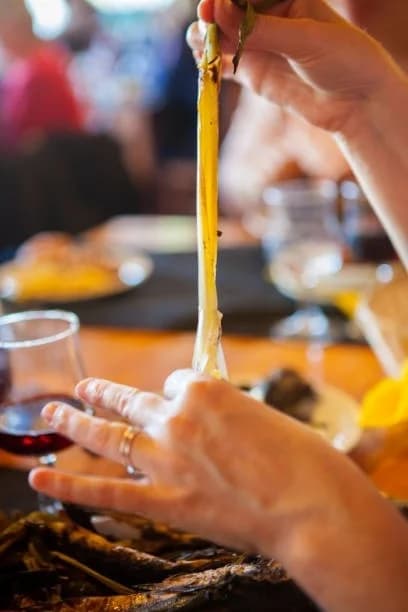
Now comes the fun part: the calçot is peeled by hand, held by the green part, dipped generously in romesco sauce, held up high, and ready to eat.
It's not mandatory to get messy, but it's normal for that to happen, which is why it's common to wear a bib for the occasion.
Every year, at the end of January, Valls celebrates the Gran Festa de la Calçotada, a day when thousands of people gather to pay tribute to this product. There are competitions for growers, calçot eaters, and popular tastings.
In addition, calçots from Valls have Protected Geographical Indication (PGI) status, which officially recognizes their quality and link to the region.
From local tradition to popular phenomenon
What was once an almost family tradition in specific regions has now spread throughout Catalonia and even beyond. Restaurants, farmhouses, and groups of friends organize calçotadas every season.
Although the format may vary, the essence remains the same: fire, seasonal produce, good company, and time to share.
Calçots are a wonderful example of how something simple can become a cultural symbol. Born almost by chance in Valls, they have gone from being an agricultural curiosity to starring in one of Catalonia's most beloved gastronomic celebrations.
Participating in a calçotada is much more than just eating: it's experiencing a tradition, laughing while getting covered in sauce, and celebrating winter around the fire. And perhaps that's the key to its success: in a fast-paced world, calçots invite us to slow down, get our hands dirty, and enjoy the moment together.
Join the Menuveo family
Subscribe to our newsletter to receive the latest news.