
The History of the Daily Menu: From Franco to Our Table
Discover the history of the daily menu: its origin in the Franco-era BOE, the 2010 liberalization, and the price of the menu in 2025 in today’s Spain.
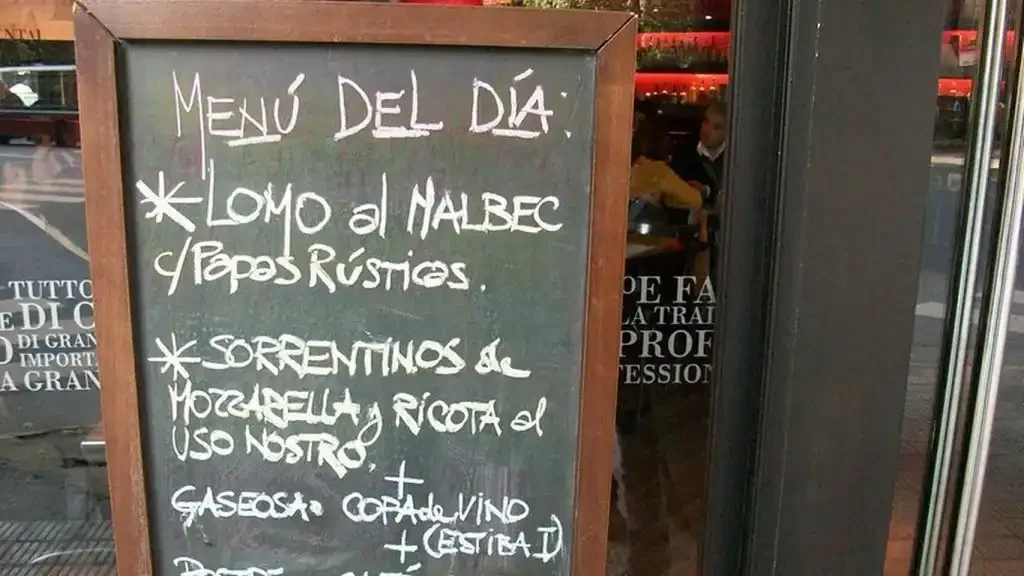
The daily menu is probably the most quintessentially Spanish gastronomic institution, alongside the bar counter and a cold beer. But its story has been told so poorly for so many years that it seems like a mix of myth, nostalgia, and anecdote.
No, it wasn’t born by accident. And no, it wasn’t a “cute idea” of Franco’s regime. It was created because the law required it, with regulated prices and minimum dishes. And yes: it has a name and a reference… in the official state bulletin (BOE).
Let’s debunk myths, put the history in order, and understand why in 2025 the average daily menu already costs €14.20, and why many bars and restaurants are struggling to balance the books.
Legal origin of the Daily Menu (1965): the truth that’s never told
Here there are no rumors, just the BOE.
The legal birth: Ministerial Order of March 17, 1965 (BOE-A-1965-6262)
During the tourist boom under Franco’s regime, the Ministry of Information and Tourism, led by Manuel Fraga, issued an order obliging all Spanish restaurants to offer a Tourist Menu accessible to any traveler.
Article 3 leaves no room for doubt:
“In all cases, restaurants are required to offer the Tourist Menu.”
Mandatory. For everyone. No debate.
What the law required:
- First course (soup, cream, or equivalent)
- Second course (meat, fish, or eggs)
- Side dish
- Dessert
- Bread
- Drink
And at a regulated price according to the restaurant’s category.
This is the true origin of the daily menu. Not tradition, not custom. Law. Pure regulation.

1981: name change… but NOT disappearance
Order of July 10, 1981 (BOE-A-1981-16299)
In 1981, the Tourist Menu officially became the “House Menu,” but the concept of a regulated menu did not disappear. The administration updated the regulations for the new political and tourism context, but still specified how a complete meal should be offered at a fixed price.
In practice, the 1981 order meant:
- The label changed: from “Tourist Menu” (very focused on foreign visitors) to “House Menu,” more neutral and also aimed at local customers.
- The obligation remained for most restaurants; only the highest category (five-star) establishments could opt out if they chose.
- Transparency was reinforced: the menu had to be written, separate from the main menu, with a total price and list of dishes so that the customer knew exactly what they were paying for.
In other words, the daily menu remained a regulated and monitored product: not a courtesy from the restaurant, but a tool to guarantee a “complete and affordable” option within the establishment.
So the idea that “the obligation ended in 1981” is incomplete; the real turning point came nearly thirty years later, with the liberalization of 2010, when offering the daily menu ceased to be a legal requirement and became the restaurant’s business decision.
Is it mandatory today? The truth about the 2010 liberalization
The real change came in 2010, with the famous Omnibus Law, derived from the European Services Directive. That’s when the state obligation was definitively eliminated.
Since then:
- There is NO state requirement to offer a daily menu
- Each restaurant decides whether to offer it
- Some autonomous communities may suggest indicative prices or transparency requirements, but nothing mandatory
That’s why today every neighborhood has a different reality: in some areas the daily menu has disappeared, while in others it remains the lunchtime lifesaver.
Evolution of the daily menu price in Spain (2016–2025)
According to the Spain Hospitality Yearbook + Edenred (2025), the average daily menu price has steadily increased over the past decade, reflecting both inflation and rising ingredient costs.
Average daily menu price in 2025: €14.20
Up 1.5% from 2024.
Regional breakdown:
- Balearic Islands → €16
- Madrid → ~€15
- Catalonia → €14.5
- Canary Islands → €13
Most interesting:
Cumulative increase since 2016: +19.5%
| 2016 | ~11.9 |
| 2018 | 12.3 |
| 2020 | 12.8 |
| 2022 | 13.1 |
| 2024 | 14.0 |
| 2025 | 14.2 |
Why has it increased so much? The blame isn’t (just) on the bar
The daily menu price has risen sharply in recent years, and not because bars want to earn more: the cost of producing each meal has steadily increased.
Key factors:
- Olive oil and other basic ingredients: what used to be cheap is now much more expensive
- Electricity and gas: preparing and keeping each dish warm costs more
- Rent and premises: the spaces where meals are served have become pricier
- Labor: wages, social security, and staff shifts directly affect the final cost
- Fresh raw materials: meat, fish, and vegetables have increased in price and fluctuate with season and availability
The consequence is clear: a menu that could sell for €10–12 ten years ago would not cover production costs today. This explains why prices have risen and why some bars have had to adjust their menus—not because they “want to make more money.”
So… is the daily menu in danger?
Yes, but not for the reasons you think
Many articles focus on nostalgia:
- “What a shame, there are no €10 menus anymore.”
- “We’re losing tradition.”
It’s fine to feel that way, but it doesn’t tell the whole story.
The truth is that many menus today don’t make sense if managed the same way as 15 years ago. Costs have risen, ingredients are more expensive, and preparing dozens of menus at lunchtime requires organization.
The future of the daily menu depends on management
The daily menu is still the king of lunch, but offering it isn’t enough: it must be sustainable and appealing to customers.
Ways to make it work better:
- Keep the menu updated and clear
- Adapt dishes according to season and availability
- Maintain quality and consistency
- Updating menus online instantly
- Translating them for tourists
- Showing real photos of dishes
- Linking them to Google Maps and online profiles
- Making the menu more accessible and appealing to customers
It’s not magic; it’s just a way for bars and restaurants to keep offering their daily menu without losing their essence.

Conclusion: the daily menu isn’t disappearing, it’s evolving
Looking at it overall:
- It was born by law in 1965
- Remained regulated until 2010
- Has increased almost 20% in recent years
- Rising costs have tightened profit margins
- It remains Spain’s favorite lunchtime meal
It’s not a question of whether it will survive, but how it will stay relevant. Bars that can adapt, organize, and present their menu attractively will continue filling their dining rooms at midday.
Those that don’t… will have to rethink how to attract customers, because tradition alone no longer sustains the daily menu.
Join the Menuveo family
Subscribe to our newsletter to receive the latest news.